Showing posts with label atheist. Show all posts

What Is an Atheist?

What is Atheist?

Every now and then it pays to review the basics. Rest assured that no principle of reasoning is so basic or so obvious, or repeated so often, as to prevent fundamentalist Christian apologists from violating it repeatedly. The more sophisticated apologists do so under the illusion that all the objections have been met. They just haven't looked deeply enough. The rest are blissfully ignorant of the entire landscape. Principles? What principles?

One of the most basic principles of reasoning is this: The burden of proof is on those who would add to our public knowledge. If I claim that six-foot, green spiders inhabit the hills around San Diego, and if I want this to become accepted public knowledge, then the burden of proof is entirely on my shoulders. You are under no obligation to go to San Diego and search those hills in order to prove me wrong. Indeed, if I were the least bit clever, you could never prove me wrong! Perhaps those green spiders are very rare and good at avoiding people. Maybe they even have supernatural properties that shield them from unwanted detection. No matter how hard you searched, I could always come up with some excuse for your failure to find those giant, green spiders.

If the burden of proof rightfully belonged on your shoulders, giant, green spiders would have quickly become part of our store of accepted public knowledge. We would have to take them seriously until proven otherwise. But who has the means to prove otherwise? Thus, the library of accepted public knowledge would soon be corrupted. Virtually every crackpot idea blowing in the wind would firmly lodge there.

If we wish to protect the integrity of our store of accepted public knowledge, the burden of proof MUST rest on those who would add to it. They must give us data and reasoning that establishes their claim beyond a reasonable doubt. That means all serious competition must also be ruled out beyond a reasonable doubt.

The Christian Research Institute Journal (Part One - Fall 1991)1 shows how easy it is for Christian philosophers to dispense with the above principle of reasoning. Let me paraphrase their argument:

When Christians and atheists debate the question “Does God exist?” atheists usually assert that the entire burden of proof rests on the Christian. This is not true. As Christian philosopher William Lane Craig has stated, when an interrogative (such as Does God exist?) is debated each side must shoulder the burden of proof. This is unlike debating a proposition such as “God does exist,” where the burden of proof rests entirely with the affirmative side. It follows then that when debating the question of God's existence, both the Christian and the atheist are obligated to provide support for their position. The Christian should insist that the atheist provide proof as to God's alleged nonexistence. That puts the atheist into a logical bind.

Craig may be technically correct, assuming that both sides agree upon the meaning of “God.” The atheist who denies this proposition is saying that a being with all the qualities that define God does not, in all probability, exist. That's a positive statement about the real world. Among other things, it implies that no matter where we look we will never find God. Evidence is needed. We might call this the “strong” or “assertive” position for atheism. The theist, of course, is saying that there is good evidence that such a being exists. Again, that's a positive statement requiring support. In Craig's example both sides have a burden of proof, though not necessarily equal.

For most of us, however, the real proposition being debated is this: Shall the theist's claim that God exists be admitted to the public store of accepted knowledge2? Those who say “No” don't have to make a positive case. The burden of proof, as shown earlier, rests entirely on those who say “Yes.” They must convince the gatekeepers of accepted knowledge that their claim has passed all the tests and earned its stripes. Otherwise, all chaos would break loose and our public library of accepted knowledge would become corrupted.

The atheist may simply show that the case for God has flunked the test for “factual” public knowledge. That is, the idea of God may be incoherent or, to the extent that it is intelligible, seriously lacking in evidence. On those grounds, the claim that God exists may be rejected as fit, public knowledge. In this case, the atheist acts as a concerned gatekeeper and does not actually add to the public store of accepted knowledge. He is not declaring that God does not exist. His view carries no burden of proof beyond documenting the inadequacy of the theist's proof. We might call this the “weak” or “minimal” atheist position.

Therefore, the debate as to whether God exists or not, understood as an attempt to determine whether the “God” concept should be added to (or removed from2) the public storehouse of accepted knowledge, places the full burden of proof on the theist. The theist must show that his idea is worthy of public trust, as having earned its stripes.

If the theist can make the atheist share the burden of proof, then his next point is that the atheist cannot logically prove God's nonexistence. However, even if we mistakenly grant the theist that much leeway, he is not home free. The atheist might still have the better argument by far and, yet, be unable to prove God's nonexistence. More to the point, the “strong” or “assertive” atheistic position can be proven beyond a reasonable doubt for some definitions of “God.”
If the definition of God has contradictory elements in it, then the atheist most certainly can prove that there is no such thing as “God”! If the existence of God is firmly attached to an absurd, testable deed, such as Noah's worldwide flood, then the atheist most certainly can prove that God's nonexistence beyond a reasonable doubt! If some necessary quality of God implies that the world would be greatly different than it is, then the atheist has a good case for God's nonexistence3. In the second example, the theist can redefine “God” by disassociating him from embarrassing events-usually with a minimum of theological damage. To be sure, God and his universe have been redefined continuously by theologians as knowledge has advanced.

In the real world of atoms and energy we deal with probabilities-not logical, airtight proofs. Certainty (to the extent that fallible humans can construct error-free proofs) belongs to mathematics and other logical systems, which are built up deductively from a set of accepted postulates. The game of chess is an example. We know with certainty that a king and a rook, given accurate play, can checkmate a lone king. Some of those logical systems, such as mathematics, may serve as ideal models for aspects of the real world, but their certainty cannot be carried over since that requires a further conclusion about the nature of the physical world. Inductive logic rules the physical realm and does not admit certainty. (Deductive reasoning can take us with 100% certainty from a set of selected postulates, which don't have to be proved inasmuch as they are assumed, to various conclusions; Inductive reasoning takes us from observed facts to probable causes.)

The “strong” or “assertive” atheist need only show that his case is superior to that of the theist. He doesn't have to logically prove God's nonexistence. The requirement for such absolute proof is absurd, as inductive reasoning does not admit certainty.

In order to get out from underneath the burden of proof, the Christian Research Institute attempts to corner the “correct” definition of “atheist.”

Atheists of this variety [minimal] have actually redefined atheism to mean “an absence of belief in God” rather than “a denial of God's existence.”
(Christian Research Institute Journal, Part One - Fall 1991)

…defensive [“minimal”] atheism is using a stipulative or nonstandard definition for the word atheism. Paul Edwards, a prominent atheist and editor of The Encyclopedia of Philosophy, defines an atheist as “a person who maintains that there is no God.” Atheism therefore implies a denial of God's existence, not just an absence of belief.
(Christian Research Institute Journal, Part One - Fall 1991)

The implication here is that the correct definition of “atheism” implies a denial of God's existence, not just an absence of belief. It would then follow that the atheist must shoulder part of the burden of proof. But, there is a fly in the ointment.

Another basic principle of good reasoning is: Definitions are neither “right” nor “wrong.” A definition simply tells us what a word means to a particular group of people. Definitions are not subject to proof or disproof in the way theorems are. You or I may reject a definition if it is misleading, self-contradictory, incoherent or useless, but we cannot lay claim to having the “correct” definition if several are in use. In defining our terms, our obligation is to avoid unnecessary confusion and maximize communication.

Many educated atheists understand “atheist” to mean “a”—“theist” or “non”—“theist.” If we wish to take out the infants and others, those who are simply unaware of theism, we could call them unaware non-theists. A complete discussion of atheism, then, necessarily entails “weak” or “minimal” atheism, call it whatever you want. The theist cannot simply define those atheists out of existence!

Those who view “God” as an incoherent or unintelligible concept could also be classified among the “weak” or “minimal” atheists. They are not much different than those who object to adding God to the public storehouse of accepted knowledge because they find the evidence to be totally unconvincing, people who also personally reject the claim that God exists. By contrast, the “assertive” or “strong” atheist flatly denies God's existence. He or she feels that the term “God” is coherent enough for such a positive statement.

In the case of a contradictory definition, such as a square-circle, it doesn't really make sense to ask whether the object exists or not. The name doesn't correspond to anything; we have no pattern to look for. For that reason, I hold that a contradictory or unintelligible definition for “God” is not equivalent to the claim that “God does not exist” - the latter being the claim of “strong” or “assertive” atheism. The theist is obliged to provide a meaningful definition of “God” before the question of God's existence can be meaningfully discussed. Thus, an incoherent definition of “God” has some similarities to a serious lack of evidence for God's existence. In both cases the atheist is saying to the theist, “You have more work to do before I can take your argument seriously.” For that reason, I place those atheists who reject “God” (because of an incoherent definition) among the “weak” or “minimal” atheists.

The main point is this: No argument based on another definition for “atheist” can place the burden of proof on the shoulders of a “minimal” atheist. If the theist wishes to address atheism competently, he must deal with both “assertive” and “minimal” atheism - their definitions. Calling “minimal” atheism by another name does not make it go away! The theist cannot declare that there is only one, correct definition for all atheists, no matter who he quotes.

Remember, it is only those atheists who advance the “strong” or “assertive” case for atheism who must share the burden of proof in this debate. The “minimal” atheist, in order to carry the day, need only show that the theist has not proven God's existence beyond a reasonable doubt. Pointing out a serious lack of evidence or faulty reasoning destroys the theist's case. The conclusion is not that God does not exist but, rather, that the concept of God has no serious credibility as established fact. On those grounds, the “minimal” atheist rejects (does not embrace) the idea of God, even as you or I would reject the Easter Bunny.

The Christian Research Institute also tries to undermine “minimal” atheism by confusing it with agnosticism:

It should also be stated that defensive atheism's absence of belief sounds very similar to agnosticism (which professes inability to determine whether God exists). The Christian should force the defensive [“minimal”] atheist to show just how his (or her) atheism differs from agnosticism. Does he know or not know that there is no God?
(Christian Research Institute Journal, Part One - Fall 1991)

Agnosticism has nothing to do with it. An agnostic, as I see it, understands what is meant by “God” but cannot find (or does not expect to find) enough evidence to personally decide the issue.

The agnostic says, “I don't know if God exists and I suspend judgment.” The “minimal” atheist says, “I personally reject the claim that God exists, because your case for God does not meet the minimum standards for being admitted to (or remaining in2) the public store of accepted knowledge. I find serious problems with this proof, that proof, and the other proofs you have for God. I find the whole matter unconvincing, even unintelligible.” The “assertive” atheist says, “I have a pretty good idea as to what you mean by “God,” and God clearly doesn't exist.” An atheist may take a “strong” or “assertive” position with respect to certain definitions for “God” and a “minimal” position with respect to theism in general.

To briefly sum up, one cannot rationally know that there is no God unless he or she has some idea as to what “God” means. The burden is on the theist to provide a sound definition and a compelling argument for God. However, if an atheist declares outright that God does not exist, then he or she also takes on the burden of proof. William Craig, in adopting a rather narrow formulation of this debate, has attempted to shift the burden of proof onto the shoulders of the “minimal” atheists as well. Yet, the “minimal” atheist is not claiming that “God does not exist.” He or she is simply not impressed with the case for theism anymore than you or I would be impressed with the case for six-foot, green spiders in the hills of San Diego. Having not exhaustively examined those hills, you or I cannot properly say that we “know” that there is no such thing. However, based on the observations of others and on certain theoretical considerations, you or I would conclude that the case for those spiders is extremely remote. We are justified in personally rejecting the whole idea as unworthy of further pursuit. By pointing out a serious lack of evidence or faulty reasoning on behalf of the theist, the “minimal” atheist has adequately defended his or her personal rejection of the God hypothesis.

Our attempt to safeguard the public store or library of accepted knowledge does not require that we gather evidence until we “know” that those green spiders don't exist-if, indeed, that could be done. It is enough for us to note that the case for six-foot, green spiders is not convincing.

1. Christian Research Institute
P.O. Box 7000
Rancho Santa Margarita
California 92688-7000
Web Site: http://www.equip.org

2. For those who might point out that god-belief is already widely accepted, the proposition could be this: Does the theist's claim that God exists really meet the standards for being in the public store of accepted knowledge? The burden of proof is still on those who say, “Yes.” Otherwise, there would be no means for eliminating erroneous or obsolete claims.

Dave E. Matson, editor
The Oak Hill Free Press
P.O. Box 61274
Pasadena, CA 91116

103514.3640@compuserve.com

June 5, 1999
(Revised: May 17, 2003)

Understanding Atheists

Atheism

An atheist is kicked out of Boy Scouts for professing his beliefs. An Alabama Supreme Court justice erects a 5,200-pound granite shrine to the Ten Commandments in the state courthouse. Creationists contaminate the public schools of Ohio and parts of Georgia with their pseudoscientific scheme to undermine the scientific theory of evolution. The Bush administration, judging “ensoulment” has occurred by the life's blastocyst stage, restricts federally supported stem cell research. Americans are outraged when the words “under God” in the Pledge of Allegiance are ruled unconstitutional.

This is a surprising level of hostility toward secularism, especially in a country whose constitution never mentions the word God, and prohibits the establishment of any religious doctrine - even that of monotheism.

I used to be a relatively content atheist; why care if the majority of people believe in one god or another?

After all, everyone rejects the existence of most gods; it's only a matter of degree. I'll bet most Christians don't believe in the existence of Zeus, Oden, Vishnu, Mithrus, Horus or the tree Druid spirits.

Count me in. I don't accept any of that primitive mythology either. I differ only by including the God of the Hebrew Scriptures to the long list of hypothetical beings that I see no compelling evidence for.
But after recent events, especially the creationists' war on science, and the Sept. 11 terrorist attacks, my apathy has eroded away. The assault on secular society is too frightening. Organized religion is the most dangerous problem in our world.

Although not all secularists are atheists, many people equate the two; and atheism, it is argued, unavoidably leads to immorality and bad behavior. The absurdity of that assumption is staggering.
Bad behavior? Compared to what? Where is the evidence that belief in a deity leads to good behavior? Our prisons are filled with theists. The child molesting Catholic priests are clearly religious, as are the bishops who protected and relocated them. And atheists were not responsible for the inconceivable cruelty and suffering of the Middle Ages, the Inquisition or the Crusades - nope, that was organized religion.

In contrast, Darrell Lambert, the atheist Boy Scout, had achieved Eagle Scout status and earned 39 merit badges - impressive accomplishments for an “amoral atheist.” Quite simply, morality as a product of religion is a myth.

During any discussion with theists, after they inevitably fail to prove God's existence, the assertion is made that atheists cannot disprove the existence of God. While this is quite correct, of course, it is also quite irrelevant. There are an infinite number of beings whose existence is impossible to disprove (Zeus, Oden, Vishnu, unicorns, etc.).

The inability to disprove something's existence is not a rational, or compelling reason for belief. The burden of proof lies with those who make a positive claim of existence.

Most accurately defined, atheism simply means “without belief in a deity.” But some atheists do argue that God does not exist. Usually this refers to a specific concept of God that is paradoxical and not logically coherent, such an omnipotent, omniscient and omnibenevolent God.

One underappreciated problem with theism is that a belief in an afterlife has the unavoidable effect of making this life less unique and precious. Theism, therefore, inherently devalues human life. Unfortunately, as we have seen, this can have dangerous consequences.

The suicide bombers in Israel and the Sept. 11 hijacckers clearly believed in a heavenly afterlife. Good luck finding an atheist willing to strap a bomb to his or her back, or fly a plane into a building. Frighteningly, however, there seems to be no end to theists willing to perform such monstrous acts.
In the Middle East, Kashmir, Sri Lanka, Northern Ireland and elsewhere, the most intractable and dangerous of the world's problems are mired in religion. There can be no compromise when “absolute truths” are at issue.

With weapons of mass destruction potentially becoming more available, the consequences of continuing religious conflicts could be disastrous. Why are religious groups so self-destructively stubborn?

How can they be so absolutely certain in beliefs that contradict those of other religious groups? The answer is faith.

Because of the lack of positive evidence for the existence of a deity, all religions require some level of faith to foster belief. Faith is, by definition, the firm belief in something without proof.
Interesting questions arise. How does faith originate? How does an individual know which religion to blindly accept and obey? The answer is shockingly straightforward.

The vast majority of personal religious beliefs can be accurately predicted based solely on the beliefs of one's parents or the culture one is raised in. Odds are that an individual born in Saudi Arabia will be a Muslim; in Ireland, a Catholic; in India, a Hindu, and so on. In an effort to be intellectually honest, religionists should ask themselves, “Are my religious beliefs based on rationality and evidence or indoctrination?”

Many might find an honest answer to be simultaneously illuminating and disturbing. Ultimately, no religion can demonstrate its firmly held beliefs are factual. Logic and reason are not helpful when choosing the “truth” of one religion over another.

Faith is required, and the origin of an individual's faith toward any particular religion is overwhelmingly cultural indoctrination.

Religious surveys indicate the United States is a predominantly Christian nation; as such, the general public holds a variety of interesting supernatural beliefs: virgin birth, resurrection, the devil, God, heaven, hell, immortal souls, original sin, angels, demons, etc. Although I strongly support an individual's right to hold whatever beliefs he or she cares to, it's important for religionists to recognize their supernatural beliefs are anything but established facts.

Their beliefs are, instead, fundamentally based on faith. These supernatural opinions have no place in a secular government. Curtailing funding for stem cell research, a technology with enormous life-saving potential, based on the supposed existence of a soul is as absurd as basing foreign policy decisions on tarot card readings.

It is simply irrational for government policies to be prejudiced by unsupported supernatural beliefs and indoctrinations.

John Bice is an MSU staff member at Life Sciences Building. Reach him at bice/msu.edu.

Morality

Morality

by Dave E. Matson

The question of morality, of how we ought to behave can only be answered if we agree on what we mean by that slippery word “morality.” If we are asking how we should behave, then we must complete the question by adding “to achieve goal X,” where X is specified. In failing to properly complete the question, we have an open-ended question that cannot be properly answered. A good example is: Is it right to kill? Try as we might, we will find no clear, scientific answer because the question is incomplete. We need to translate “right” to some meaningful phrase, and we need to complete the question. “Is it helpful to kill to achieve goal X?” might be one translation. Will killing some of your neighbors to achieve goal Y cause your neighbors to dislike you?” is another possible translation. Once we have removed the ambiguous words and fully expanded the question we find that answers are possible.

One view of morality might be to ask how one should behave in order to maximize one's happiness — with the proviso that you must trade places with others affected by your ruling from time to time on a randomly selected basis. Thus, if you make the greater part of humanity your slaves for the benefit of a few friends, then the odds of trading places would place you (most of the time) among the slaves. This morality question would be asked of everyone affected, and if a certain behavior got, say, 90% of the votes then it is deemed moral for that world.

There are no rules in nature to tell us “how to behave.” We have not asked a proper question! We must specify our goals. If our goal is to get along with others, to live a happy life, to keep a good conscience (our conscience having been created and honed by group evolution), then our choice of behavior is definitely not arbitrary! A good deal of it will be culturally determined of course. Going around in the nude, for example, was okay for Pocahontas when she was a girl of 10 or 12 because of the views of her society. Reportedly, she did naked cartwheels around the settler's newly built stockade! That part got left on Disney's cutting-room floor! Asserting that a lot of morality (maybe most) is culturally determined is not the same thing as saying it is arbitrary. It is not arbitrary for you once you have selected your goals. In asking what good behavior is, we must ask “Good for what?”. How the goal can best be met, of course, depends a lot on the society in question. The concept of morality cannot be defined in a metaphysical vacuum, an isolated splendor, from God on high to all. It has no meaning in that sense. It's like asking what strategy works best in poker. Well, it all depends on your hand and the probable hands of the other players, and on their psychological states. In that sense it is relative, but it is not arbitrary. General rules for good play can be worked out, but they are a generalization, a kind of imperfect summary of the rules applying to specific situations. Thus with morality. Its meaning is to be found in the specifics of human interaction and not in universal proclamations.

What is it that we really want from morality? What good is it to us? Do we need it as a grease to lubricate the wheels of society? Does it safeguard our happiness and the happiness of those around us? Should it apply to all conscious life? Or, is it merely a list of arbitrary rules for getting to “heaven”? A properly formulated question as to what we expect of morality will, in principle, allow a clear answer as to our course of action, but it is up to each of us to decide what our goals will be. Nature can't tell us what we ought to do until we have a specific goal.

Moral rules can be viewed as solutions to the problems of group living. If we want a group to function smoothly without repressing those individual freedoms we value, then the solutions we seek are not arbitrary. On certain critical matters, such as murder and theft, solutions are pretty much constrained to a few close choices. Morality is basically absolute. On other matters, such as dress codes, a wide variety of solutions may be possible. Moral codes become rather arbitrary.

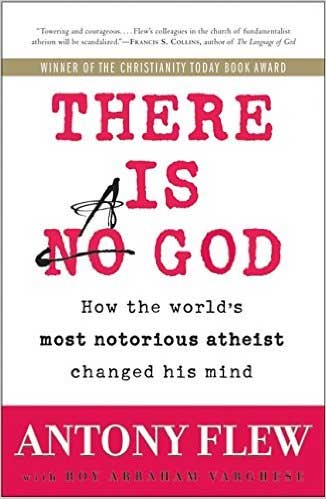
Famed Atheist Philosopher, Antony Flew, Now a Theist/Deist

Antony Flew Conversion

Edward: Famed lifelong atheist philosopher, Antony Flew (age 81),has become a theist / deist. The London TIMES had this to say about Flewʼs recent conversion: “He [Flew] is unlikely to proclaim his faith from a pulpit. He is still not a Christian and dismisses the conventional forms of divinity as ‘the monstrous oriental despots of the religions of Christianity and Islam.’ He also stands by his rejection of an afterlife.”

Flew:Iʼm thinking of a God very different from the God of the Christian and far and away from the God of Islam, because both are depicted as omnipotent Oriental despots, cosmic Saddam Husseins,” he said. “It could be a person in the sense of a being that has intelligence and a purpose, I suppose.”

In his lengthiest inteview thus far about his theism (an interview with Liberty University Christian apologist Gary Habermas), Flew had this to add:

Habermas: “In your view, then, God hasnʼt done anything about evil.”

Flew: No, not at all, other than producing a lot of it…

Habermas: Are you any closer to thinking that the resurrection could have been a historical fact?

Flew: No, I donʼt think so… What we do not have is evidence from anyone who was in Jerusalem at the time, who witnessed one of the allegedly miraculous events, and recorded his or her testimony immediately after the occurrence of that allegedly miraculous event. In the 1950s and 1960s I heard several suggestions from hard-bitten young Australian and American philosophers of conceivable miracles the actual occurrence of which, it was contended, no one could have overlooked or denied. Why, they asked, if God wanted to be recognized and worshipped, did God not produce a miracle of this unignorable and undeniable kind?”… [According to Luke-Acts, the raised Jesusʼ ascension into heaven was only witnessed by the eleven apostles, and even Luke-Acts admits that there was no preaching of “the resurrection” until seven weeks after the crucifixion.]

Habermas: Do you think that there is any chance that you might in the end move from theism to Christianity?

Flew: I think itʼs very unlikely, due to the problem of evil. But, if it did happen, I think it would be in some eccentric fit and doubtfully orthodox form: regular religious practice perhaps but without belief. If I wanted any sort of future life I should become a Jehovahʼs Witness [because at least their paradise involves corporeal persons; and Flew said earlier in the interview: “I think those who want to speak about an afterlife have got to meet the difficulty of formulating a concept of an incorporeal person… it is simply impossible to create a concept of an incorporeal spirit… Swinburne and I had been the only Gifford lecturers to treat the question of a future life for the sixty years past. Even more remarkably, Swinburne in his Gifford Lectures ignored Bishop Butlerʼs decisive observation: ‘Memory may reveal but cannot constitute personal identity.’”

One should also note that in the realm of philosophy, many theistic philosophers as well as Christian theistic philosophers, have been unable to agree on quite a lot of questions. See Contemporary Debates in the Philosophy of Religion (2003) by Michael Peterson, managing editor of the journal Faith and Philosophy, published by the Society of Christian Philosophers. Here are some questions from that book, questions on which theistic philosophers disagree:

  • Can Only One Religion Be True?

  • How to Sink in Cognitive Quicksand: Nuancing Religious Pluralism: Keith E.Yandell (University of Wisconsin)

  • It Is Not Reasonable to Believer that Only One Religion is True: Peter Byrne (Kingʼs College, University of London)

  • Does God Take Risks in Governing the World?

  • God Takes Risks: William Hasker (Huntington College)

  • God Does Not Take Risks: Paul Helm (Regent College)

  • Does God Respond to Petitionary Prayer?

  • God Responds to Prayer: Michael J. Murray (Franklin and Marshall College)

  • God Does Not Necessarily Respond to Prayer: David Basinger (Roberts Wesleyan College)

  • Is Eternal Damnation Compatible with the Christian Concept of God?

  • Eternal Hell and the Christian Concept of God: Jerry Walls (Asbury Theological Seminary)

  • No Hell: Thomas Talbott (Willamette University)

  • Is Morality Based on Godʼs Commands?

  • Divine Commands Are the Foundation of Morality: Janine Marie Idziak (Loras College)

    Ethics Is Based on Natural Law: Craig A. Boyd (Greenville College) and Raymond J. VanArragon (Asbury College)

  • Should a Christian Be a Mind-Body Dualist?

  • Christians Should Affirm Mind-Body Dualism: Dean W. Zimmerman (Rutgers University)

  • Christians Should Reject Mind-Body Dualism: Lynne Rudder Baker (University of Massachusetts)


In a letter to Philosophy Now magazine (Issue 47, August/September 2004, p. 22) Flew noted that “It has become inordinately difficult even to begin to think about constructing a naturalistic theory of the evolution of that first reproducing organism.” Flew then recommends two books: “The first book is Roy Abraham Vargheseʼs “The Wonderful World: A Journey from Modern Science to the Mind of God” (Fountain Hills, Arizona: Tyr Publishing, 2003). The second book is Gerald L. Schroederʼs The Hidden Face of God: Science Reveals the Ultimate Truth (Touchstone, New York 2001).”

“Gerald Schroederʼs” name also came up in Flewʼs interview with Habermas in which Flew said: “I am open to [the notion of theistic revelation], but not enthusiastic about potential revelation from God. On the positive side, for example, I am very much impressed with physicist Gerald Schroederʼs comments on Genesis 1. That this biblical account might be scientifically accurate raises the possibility that it is revelation.” (Original Source: La Mirada, Calif., Dec. 9/PRNewswire)

Questioning Flewʼs Praise of the Works of “Gerald Schroeder”

Schroederʼs attempts to discover direct concordances between Genesis and modern science are far from satisfactory in the view of many of his fellow scientists, so I hope Flew will look into such matters a bit deeper. For instance, Schroederʼs claim about how much genetic change it would take to create human beings is wrong. According to the latest data, “The difference between human and chimp genomes is only about 1.23%, rather than 1.4% as originally thought.”

Even more importantly, if man and chimp diverged from a common ancestor, you must half those differences yet again. In fact the differences between human and chimp genomes are less than that between the genomes of near identical sibling species of fruit flies. And there is even evidence in human chromosome #2 that points to it being the result of a fusion of two chromosomes that very closely resemble two chromosomes found in the chimpanzees, whose banding patterns line up band for band to those inside human chromosome #2. Moreover, human chromosome #2 still contains remnants of that fusion process—in the form of a faint second centromere (there is almost always just one centromere per chromosome, found in its middle, not two centromeres), and reversed teleomeric sequences in the middle of that chromosome (telomeres are almost always found at the tips of chromosomes, not in the middle, and not in reverse order, hence finding them in the middle of a chromosome means that portion used to be the tip or end of a second chromosome).

Here are some reviews of Schroederʼs books that perhaps Flew might like to acquaint himself with before lending any more praises to Schroederʼs work: Frank Sonleitner,Department of Zoology, University of Oklahoma, Norman OK 73019 reviews Schroederʼs The Science of God:

Source: www.ncseweb.org/

“This book is essentially an elaboration and update of Schroederʼs earlier book Genesis and the Big Bang published in 1990. Schroeder is an Israeli physicist who has also extensively studied biblical interpretation. He uses the arguments of the Anthropic principle (the Big Bang and the fine-tuning of the universal constants) as evidence for God; but he also insists that the Bible and science agree. Genesis is not to be taken literally nor dismissed as poetry but must be interpreted correctly following the lead of talmudic scholars such as Nahmanides and Maimonides. Although his interpretation twists, stretches, and sometimes directly contradicts the literal meaning of Genesis, it confirms all the findings of modern cosmology and geology.

“Using a universal time clock based on the stretching of the wavelengths of light as the universe expands, he concludes that the universe is 15.75 billion years old. The six days of Genesis consist of a nonlinear day-age description of the history; day 1 covers the first 8 billion years, and day 6 only the last 1/4 billion.

“Schroeder accepts the standard geologic and paleontologic history of the earth but he balks at evolution (although he admits some sort of genetic continuity as suggested by the evidence of comparative anatomy, biochemistry and embryonic recapitulation). He rejects all transitional forms among higher categories such as classes and phyla, but later admits that there might be transitional forms within classes. (He does discuss the recently discovered intermediate forms of whales.)

“Schroeder rejects evolution because he considers its mechanism to rest solely on pure chance. There is no discussion of natural selection; it doesnʼt appear in the index although the term is used in passing while discussing Dawkins. His “proof” that it is impossible for convergent evolution to produce similar eyes in taxa which did not inherit these structures from a common ancestor uses a mathematical calculation based on two assumptions - (1) evolution is pure chance; and (2) the taxa have no genes in common except those “inherited” from the protozoa. Yet in other places he seems to be aware of the recent evidence that the phyla have many genes in common; he discusses the Hox genes that determine body plans and the Pax genes that are involved in eye formation!

“Schroeder admits that there were “pre-Adamites” (Cro-Magnon and Neanderthals) living for 40 000 years prior to Adam, but questions the existence of earlier hominid species because of the fragmentary nature of their fossils. Again he uses a mathematical model to show that the evolution of humans from an ape ancestor is impossible. This model also assumes that (1) evolution would occur by pure chance and (2) one million mutations would be necessary to produce the ape-human transition! “It takes more than the Big Bang and the fine tuning of universal constants to demonstrate that the creator is the kind, loving, personal God worshipped by Christians. And there Schroederʼs arguments fall apart. For example, he argues that quantum mechanics provides the basis of free will and that the determinacy of our genes does not prevent our exercising free will, yet later he says that randomness in nature (including random mutations) is necessary for free will! And natural disasters are necessary. We must suffer earthquakes and volcanic eruptions that result from plate tectonics made possible by the earthʼs molten core because the latter is necessary to generate a magnetic field to protect us from the high energy radiation produced by the life-giving sun. But then he says that the biblical Creator could have made stars that didnʼt produce those lethal rays but “they would not be natural” and would offer absolute testimony of the Creatorʼs existence! And still later he contradicts this principle (that the universe is organized “naturally” to hide the existence of the Creator) by saying that the earth is at an “unnatural” distance from the sun and hints that this may be miraculous! (According to Schroeder some exponential law determines the distance of the planets, and the earthʼs distance does not fit the pattern.)

“Evolutionists will justifiably criticize Schroeder for his simplistic and inconsistent treatment of evolution while the real creationists will reject him for his theology which includes rejection of the literal reading of Genesis, acceptance of the Big Bang, an old age for the earth, existence of pre-Adamites, a local flood, and ignoring Christ, Christianity and the New Testament.”


Victor J. Stenger, professor of physics and astronomy at the University of Hawaii. Review of Schroederʼs The Science of God:

“How can both the Bible and science be right? Israeli physicist Gerald Schroeder says he can show us how. Letʼs start with cosmology. The Bible says God created the universe in six days and indicates the passage of only about 6,000 years since then. Science currently estimates the visible universe to be about 13 billion years old, give or take a few billion. Schroeder reconciles the two, explaining that the six days of the Bible refer to a different measure of time. He explains: “there is no possible way for those first six days to have an Earth-based perspective simply because for the first two of those six days there was no Earth” (51). “Instead, time during this six day period was measured on a cosmic clock. And what else could be used for that clock but the vibrations of light (electromagnetic waves)? Today the light from creation appears as the cosmic microwave background. This is now redshifted by a factor of a trillion (1012) from the period of “quark confinement” when matter as we know it first began to form. Thus the cosmic clock at that epoch ran off a trillion days for each of our modern days. The six cosmic days of creation thus took about 15 billion years earth time, give or take a few billion. So, according to the author, Genesis is not only consistent with cosmology, it gives the correct age of the universe!

“Each of the six days in Schroederʼs Genesis actually takes a different length of earth time. The duration D, in earth days, of each cosmic day t is calculated from the formula D = (Ao/L)exp(-Lt), where Ao = 4x10¹² (the ratio of the frequencies of the cosmic microwave background at quark confinement compared to now) and L = 0.693 (natural log of 2). More simply, cosmic day one is 8 billion earth years long and you divide by two to get the duration of each succeeding cosmic day. “Cosmic day one starts 15.75 billion earth years ago and covers the creation of the universe, the “breaking free” of light as electrons bind to atomic nuclei, and the beginning of galaxy formation. This is described in Gen. 1:1-5 as the creation followed by light separating from the darkness.

“Cosmic day two starts 7.75 billion earth years ago and lasts four billion earth years. During this period the stars and galaxies are born. This corresponds to Gen. 1:6-8, the formation of the heavenly firmament. “Cosmic day three starts 3.75 billion earth years ago. During two billion earth years, the earth cools, water appears, and the first life forms appear. In Gen. 1:9-13, vegetation first appears during the third day. “Cosmic day four starts 1.75 billion earth years ago and lasts a billion earth years. The earthʼs atmosphere becomes transparent and photosynthesis produces an oxygen-rich atmosphere. Schroeder says that this corresponds to Gen. 1:14-19 when “the Sun, Moon, and stars become visible in the heavens” (67).

“Cosmic day five starts 750 million earth years ago and lasts 500 million earth years. During this period, the first multicellular animals appear and the oceans swarm with life. Gen. 1:20-23 says the waters bring forth swarms of living creatures and “birds fly above the earth” (94). “Cosmic day six starts 250 million years ago and ends at the time of Adam. During this period we have a massive extinction in which 90 percent of life is destroyed and then repopulated with humanoids and humans. This, Schroeder says, corresponds to what is described in Gen. 1:24-31. “Technically, Schroederʼs formula gives the present as the end of the sixth day. However, it could just as well have ended a few thousand years ago and not affect the rest of the calculation where things are rounded off at hundreds of millions of years. Schroeder argues that after the six cosmic days of creation, Genesis switches its focus over to humanity and starts measuring time in human terms. The rest of the Bible concerns itself with the 6,000 earth years since Adam and Eve, estimated from the Bible in Bishop Ussher fashion.

“Schroeder does not deny the existence of hominid creatures before Adam. He talks about Neanderthals and Cro-Magnons, and accepts that they had developed tools, pottery, and many human-like qualities. In Lev. 11:33 the Bible talks about pottery. But, Schroeder argues that since it never mentions the invention of pottery, that event must have pre-dated Adam (130).

“According to the author, the Bible has no interest in these pre-Adam hominids because they were not yet fully human and had no souls. Thus they are never mentioned. Adam represents the quantitative change to a large brain, but more important, the qualitative change that makes us different from all other forms of life: “our soul of human spirituality” (133). God breathed this into Adam, the first real human, 6,000 years ago. “Schroederʼs attempt to connect 31 lines of Genesis to big-bang cosmology and earth paleontology makes entertaining reading, but will convince no one who is not already convinced or totally lacking of critical facilities.

“Let us return to the beginning. Schroederʼs use of quark confinement as the defining moment for his cosmic time scale is completely arbitrary. He seems to have chosen it for no better reason than it gives the answer he wants. The redshift from quark confinement to the present is of the order of 1012. Multiplying this by six days gives 15 billion years, which is consistent with our current estimate for the age of the universe. “Alternatively, Schroeder might have chosen the moment in the early universe called “decoupling,” which represents the point where radiation separates from matter. Indeed, he relates this event to the separation of the “light from the darkness” described in Genesis day one. But the redshift from decoupling to the present is only of the order of 1,000, which would give an earth time interval of only fifteen years for the six cosmic days of creation. If he had chosen some other moment, he would have obtained yet a different time scale.

“Furthermore, by Schroederʼs own formula the universe creation corresponds to the time of quark confinement. Blueshifting back from that point rather than redshifting ahead, the events prior to quark confinement would recede infinitely into the past, in earth time, and we would have no creation at all.

“Schroederʼs use of an exponential function to give different earth periods for each cosmic day is not justified by his argument that earth time is simply redshifted cosmic time. While an exponential relationship would apply for the inflationary epoch in the early universe, that has ended by the time of quark confinement. Afterwards we have the almost linear Hubble expansion in which the redshift varies as a power law with time, not exponentially. By having each cosmic day half as long as the preceding one in earth years, again a completely arbitrary, unjustified procedure, Schroeder is able to vaguely relate events known from cosmology to those described in Genesis.

“In cosmic day two the “firmament” is created. Note that Schroeder excludes from the “firmament” all galaxies more than 7.75 billion light years away, of which there are many. Furthermore, he sees no problem with calling the expanding universe a “firmament.” Like all apologists, he selects his data carefully, accepting only those which agree with his hypotheses and discarding those which do not.

“Primitive life first appears in cosmic day three. Here again it takes some mighty stretching to associate what is described in the Bible for the third day, including fruit trees, with the primitive life described by paleontology for that epoch.

“Schroeder has the sun, moon, and stars becoming visible in cosmic day four. In fact, Genesis seems to say the that sun, moon, and stars are created at that time - well after the earth was created.

“Cosmic day five has the waters teeming with life. But the biblical verses imply birds as well. Schroeder says that “birds” is a mistranslation and that the Bible here is referring to water insects instead. Translation is so easy when you know what you want a passage to say.

“Cosmic day six contains the mass extinctions of life that occurred 65 million years ago. The biblical verses referenced make no mention of mass extinction. The Biblical Flood occurs well after Adam, but Schroeder needs to end the six days of creation with Adam for other purposes. This is one event he simply cannot make fit, although he is not honest enough to say so and leaves the impression that everything is consistent.

“At times you get the impression that this book is a parody, with quite a few good chuckles when read in that context. However, the sections on evolution soon convince you that no parody is intended. They are just too unfunny, too dull. Schroeder trots out all the old, tiresome arguments about why “life could not have stared by chance” and how the simplest forms, even viruses, are “far too complex to have originated without there being an inherent chemical property of molecular self-organization and/or reaction enhancing catalysts at every step of their development” (85). He applies the usual creationist deception of calculating chance probabilities as if chance is the only operative mechanism, and then saying this “proves” that God intervenes along the way when they come out very low. And, of course, the “staccato aspect of the fossil record” refutes classical evolution. “These rapid changes cannot be explained by purely random mutations at the molecular-genetic level” (87).

“Notice how often theists tell us that something cannot be explained except by God? They never seem to learn from history.”

Revised Title: The Delusions of Gerald Schroeder, December 5, 1997


A young-earth creationist Amazon reviewer of The Science of God:

“I find many of his interpretations manipulated to his own cause, e.g. Gen. 1:12 which he interprets: “and the earth brought forth life.” A more reliable interpretation of the text renders: “and the earth(or land) brought forth vegetation.” Further, he cites no credible Hebrew scholar who agrees with his interpretation of day for order and night for chaos. He relies much more for his case on the mystical kabbalah, especially Nahmanides, which can only be explained at best as “opinion.” This leaves him in positions which do not square with all of inspired Scripture…For the exact opposite view of Schroederʼs key thesis: clocks ticking faster at the center and slow at the edge of the cosmos—- see young-earth creationist, D. Russell Humphreysʼs book “Starlight and Time.”


Old earth creationist Hugh Ross reviews Schroederʼs Genesis And The Big Bang:

Source: www.reasons.org/resources/apologetics/p9401.html?main

“One problem with his view is that it clashes with the scientific data on the timing of Earthʼs origin. Since the earth already exists on the first creation day of Genesis 1, Schroederʼs model would say that Earth began at least 12 billion years ago. Scientific measurements, however, show that it is only 4.6 billion years old. Our view is that Genesis 1:2 establishes the frame of reference for the creation events: “The Spirit of God was brooding (or hovering) over the surface of the waters.” In other words, Godʼs time and space frame in describing creation is the earthʼs surface, a frame in common with all readers of the account. The text gives no hint of Schroederʼs relativistically time-extended creation days. If one seeks Jewish support for a day-age interpretation of Genesis 1, Nathan Aviezer, another Jewish physicist, offers it in a book entitled In the Beginning: Biblical Creation and Science (Hoboken, NJ: KTAV Publishing House, 1990). Aviezer acknowledges that the six creation days of Genesis 1 must refer to long time periods.”


Amazon Reviewer of The Science of God: seapapa from Los Angeles “Schroederʼs thesis is that the author of Genesis is describing a 15 billion year history of the universe and life, even though that was never his understanding or his intention. The true meaning Genesis 1 went undetected until it was discovered by the cabalist author Nahmanides in the 11th Century AD. It was lost again until Schroeder rediscovered it. “Even accepting the dubious proposition that people can write things that actually mean the exact opposite of what they intend, the match between the Genesis timeline and the scientifically proposed history of the universe makes an ill fit. Schroeder tries to reconcile the two by focusing minutely on certain words in Genesis that could be interepreted to allow for longer time periods, while totally ignoring the text read in its entirety. For example, day three of creation supposedly lasts 1.6-3.6 billion years ago. Genesis said “let the land produce vegetation”. Success, proclaims Schroder, that matches the plant life on the planet, which is found only in the… water! He conveniently ignores the rest of the verse which calls for fruit-bearing trees and seed-bearing plants. There was nothing but protozoa and plankton back then. This is typical of the book.

“The most absurd argument is that, if properly interpreted, the 6 creation days correspond to 6 actual 24 hour days on earth AND 15 billion cosmic years. How so? Einsteinʼs relativity of time! Schroeder makes such an effort to preserve the 6 days of creation and the order of creation. “This book is ultimately a polemic. Although brilliant and articulate, one gets the feeling that Schroeder cannot bear to have Genesis undermined. That compromizes his scientific judgement.”


A Reviewer of The Science of God (at amazon.com):

“contains a few good passages, but also some egregious errors, which are puzzling when made by a PhD in Physics. For example, G. Schroeder completely misinterprets the experiments with particles moving through openings, invents some odd concept of heat diluting in enlarged volumes, misrepresents the story of photoelectric effect, etc. One striking feature of this book is that Schroeder suggests in it the chronological data , which completely contradict his own data on the same subject, given in his first book, without a word of explanation why he changed those data. A useless book.”


A Reviewer of The Science of God (at amazon.com) wrote:

“His time dilation calculations are totally at fault. The factor of one million million he uses is totally arbitery (nothing really special happened at z=1 million million). His redshift/blueshift calculations are also wrong: The background temperature (and the redshift) changed by less than 10% in the last billion years. Nowhere near the rate needed to slow down from a 500 million year per day (Day 5, according to Schreoder) to 24 hours per day. “Another serious mistake appears in his coverage of evolution: He says the the evolution from chimpanzees to humans requires a million point mutations because the difference in the active DNA between human and chimps is 1,000,000 bases.

“This is simply false. Schroeder himself says that the number of changes needed is no more than 70,000. In most cases a single point mutation is enough to complete a change.

“It would have been better if Schreoder, as a nuclear physicist, asked an expert biologist before writing his chapters about evolution…”


Reviewer: gsssew@m… from St. Louis, Missouri

I was intrigued by the title, but agitated by the contents. The entire book is filled with completely preposterous assumptions and conclusions. After reading such a book, I begin to question why someone, such as Gerald Schroeder, view themselves as scientists.

Denis: Ed, If Jerry Falwell became an evolutionist, be assured, that would be news.

Edward: Flew hasnʼt become a creationist, nor even a “life everlasting”-ist. His god is like Spinozaʼs and Einsteinʼs. So, what I meant to say was that the media played up Flewʼs change of mind (even some Christians on the web bragging he was close to converting to Christianity and holding up his example as a sort of sacred talisman against further thought concerning their particular beliefs.)


Denis: Itʼs news because of who Flew is and what he has written.

Edward: I doubted Flewʼs competency in his first debate with Habermas, published as, “Did Jesus Rise From the Dead?” because Flew demonstrated in that debate that he knew much about Hume but nearly nothing about the relevant Gospel passages. I subsequently wrote Habermas to point out Flewʼs inadequacies and got into a little letter debate with Habby that he even presented to a Christian publisher, who, however, wasnʼt interested in publishing such an exchange.

Flew himself admitted recently that he lacks competency when it comes to judging physics and biology arguments:

Flew Update (January 2005) by Richard Carrier who exchanged letters with Flew

Flew admits: “I have been mistaught by Gerald Schroeder.” He says “it was precisely because he appeared to be so well qualified as a physicist (which I am not) that I was never inclined to question what he said about physics.” Apart from his unreasonable plan of trusting a physicist on the subject of biochemistry (after all, the relevant field is biochemistry, not physics—yet it would seem Flew does not recognize the difference), this attitude seems to pervade Flewʼs method of truthseeking, of looking to a single author for authoritative information and never checking their claims (or, as in the case of Dawkins, presumed lack of claims). As Flew admitted to me, and to Stuart Wavell of the London Times, and Duncan Crary of the Humanist Network News, he has not made any effort to check up on the current state of things in any relevant field (see “No Longer Atheist, Flew Stands by ‘Presumption of Atheism’” and “In the Beginning There Was Something”). Flew has thus abandoned the very standards of inquiry that led the rest of us to atheism.

Despite all this, Flew has not retracted his belief in God, as far as I can tell. But in response to theists citing him in their favor, Flew strangely calls his “recent very modest defection from my previous unbelief” a “more radical form of unbelief,” and implies that the concept of God might actually be self-refuting, for “surely there is material here for a new and more fundamental challenge to the very conception of God as an omnipotent spirit,” but, Flew says, “I am just too old at the age of nearly 82 to initiate and conduct a major and super radical controversy about the conceivability of the putative concept of God as a spirit.” This would appear to be his excuse for everything: he wonʼt investigate the evidence because itʼs too hard. Yet he will declare beliefs in the absence of proper inquiry. Theists would do well to drop the example of Flew. Because his willfully sloppy scholarship can only help to make belief look ridiculous.

See also…

The London TIMES had this to say about Flewʼs recent conversion: “He [Flew] is unlikely to proclaim his faith from a pulpit. He is still not a Christian and dismisses the conventional forms of divinity as ‘the monstrous oriental despots of the religions of Christianity and Islam.’ He also stands by his rejection of an afterlife.”

Flew: “Iʼm thinking of a God very different from the God of the Christian and far and away from the God of Islam, because both are depicted as omnipotent Oriental despots, cosmic Saddam Husseins,” he said. “It could be a person in the sense of a being that has intelligence and a purpose, I suppose.”

abcnews.go.com

In his lengthiest interview thus far about his theism (an interview with Liberty University Christian apologist Gary Habermas), Flew had this to add:

Habermas: “In your view, then, God hasnʼt done anything about evil.”

Flew: No, not at all, other than producing a lot of it….

Habermas: Are you any closer to thinking that the resurrection could have been a historical fact?

Flew: No, I donʼt think so… What we do not have is evidence from anyone who was in Jerusalem at the time, who witnessed one of the allegedly miraculous events, and recorded his or her testimony immediately after the occurrence of that allegedly miraculous event. In the 1950s and 1960s I heard several suggestions from hard-bitten young Australian and American philosophers of conceivable miracles the actual occurrence of which, it was contended, no one could have overlooked or denied. Why, they asked, if God wanted to be recognized and worshipped, did God not produce a miracle of this unignorable and undeniable kind?”… [According to Luke-Acts, the raised Jesusʼ ascension into heaven was only witnessed by the eleven apostles, and even Luke-Acts admits that there was no preaching of “the resurrection” until seven weeks after the crucifixion.]

Habermas: Do you think that there is any chance that you might in the end move from theism to Christianity?

Flew: I think itʼs very unlikely, due to the problem of evil. But, if it did happen, I think it would be in some eccentric fit and doubtfully orthodox form: regular religious practice perhaps but without belief. If I wanted any sort of future life I should become a Jehovahʼs Witness [because at least their paradise involves corporeal persons; and Flew said earlier in the interview: “I think those who want to speak about an afterlife have got to meet the difficulty of formulating a concept of an incorporeal person… it is simply impossible to create a concept of an incorporeal spirit… Swinburne and I had been the only Gifford lecturers to treat the question of a future life for the sixty years past. Even more remarkably, Swinburne in his Gifford Lectures ignored Bishop Butlerʼs decisive observation: ‘Memory may reveal but cannot constitute personal identity.’”


Denis: Finally, to answer the question in the title of your piece: Itʼs because liberalism is OLD news.

Edward: It appears to me to be relatively big news that churchgoing continues to decline in the northern hemisphere of the Western industrialized world, especially in Christianityʼs birthplace, Europe. (The regular churchgoers who remain in North America and Europe, tend to be of a more conservative varieties.) Also, Islamʼs rate of biological reproduction means that she may possibly overtake Christianity in the future as the worldʼs number one religion, especially since reproductive rates in Europe have slipped to a low rate. So, Europe may yet be conquered by Islam in the future. Though Christianity in the southern hemisphere continues to grow, especially conservative Catholicism and miracle-mongering Protestant sects. And further conflicts with Islam will probably continue to arise there.

Nigeria Christians Attack Muslims, Kill Dozens

On the decline of churchgoing in the Northern Hemisphere see: “Trends Among Christian Believers in America” (includes links at the bottom to trends round the world)

On the rise in Christianity in the Southern Hemisphere see the links

The Next Christianity - About the kinds of Christianity that are gaining popularity in the Southern hemisphere: very hardcore, including a revival of witchhunts.

Christianityʼs New Center - More about the rapid growth of hardcore

Christianity (along with Islam) in the Southern hemisphere.

Oh, Gods! - About worldwide religious trends in general, including new religious movements.

Welcome to the Next Church - About the new American evangelical (not quite fundamentalist, but fundy-leaning) Christian megachurches, some with wealthy parishioners, although Christianityʼs primary appeal is to the poor.


Edward: Regarding Wheaton College (Billy Grahamʼs alma mater), it no longer demands that all of its professors agree that Adam and Eveʼs bodies were created directly from the earth.

Denis: Is that true? Iʼve got a friend going there this summer, and he believes that he has to sign it. But he might be wrong. So, clue me (and him) in if something has changed.

Edward: A few years ago I read in First Things or Christianity Today that Wheaton was no longer requiring faculty, staff and students to sign a statement demanding that they believe Adam and Eveʼs bodies were created directly from the dust of the earth. I havenʼt been able to find a copy of Wheatonʼs earlier statement of faith, but the present one reads, “We believe that God directly created Adam and Eve, the historical parents of the entire human race; and that they were created in His own image, distinct from all other living creatures, and in a state of original righteousness.” www.wheaton.edu/welcome/mission_textonly.html The mention of a “distinct creation” does not specify whether the body or the soul is being addressed as “distinctly created.” Even Mr. Jones, the provost at Wheaton, wrote that while professors were not required to advocate creationism, they were expected to treat it with respect. [From The Chronicle of Higher Education, May 24, 2002, “Do Professors Lose Academic Freedom by Signing Statements of Faith? Critics say the oaths at some religious colleges are intellectually confining” by Beth McMurtrie

A Wheaton College professor of Old Testament, John Walton, wrote in 2002 the NIV Application Commentary Of Genesis and he left open the question of whether certain verses in Genesis demand belief in the bodies of Adam and Eve from the dust of the earth. Walton even argues that commentary that the ancient Hebrews believed the earth was flat, and that the “serpent” in Genesis was not originally understood to be “Satan.” Waltonʼs commentary was published in 2002. Every Evangelical ought to read it. A simplified presentation by Walton.

Also, Wheaton College has a huge collection of C. S. Lewis writings and memorabilia. Lewis of course wouldnʼt be able to sign any statement of faith that demanded one must believe that Adam and Eve were created directly from the dust of the earth. In fact C. S. Lewis wasnʼt disturbed in the least by the thought of Genesis being “…derived from earlier Semitic stories which were Pagan and mythical.” [C. S. Lewis, Reflections on the Psalms (London: Collins, Fontana Books, 1958), p. 93]

“We read in Genesis (2:7) that God formed man of the dust and breathed life into him. For all the first writer knew of it, this passage might merely illustrate the survival, even in a truly creational story, of the Pagan inability to conceive true Creation, the savage, pictorial tendency to imagine God making things ‘out of’ something as the potter or the carpenter does.” [C. S. Lewis, “Scripture,” Reflections on the Psalms]

In short, “Lewis found more truth in the story of the ‘Garden of Eden’ when he regarded it as myth than as history.” [Michael J. Christensen, C. S. Lewis on Scripture: His Thoughts on the Nature of Biblical Inspiration, The Role of Revelation and the Question of Inerrancy (Waco, Texas: Word Books, 1979), pp. 34-35)]


Christianity and Atheism

Christianity and Atheism

Purdue philosophy professor a gentle atheist

In a nation in which 80 to 90 percent of adults say they believe in God, the label “atheist” rarely lands quietly in a conversation.

Say it, and many folks picture some joyless, nasty-tempered misfit who spends his days filing lawsuits against public displays of crosses and menorahs.

What to do then with the gentle, civilized, dog-loving human being that is Bill Rowe?

“Iʼve always been soft about religion in spite of my…” Rowe searched for the perfect word then just smiled. “Thatʼs why I say Iʼm a friendly atheist.”

No one who knows him begs to differ, especially Roweʼs theistic colleagues in the Department of Philosophy at Purdue University, from which he soon will retire. Nor would disagreement come from thousands of philosophy of religion students (I among them) whom Rowe has taught during his 43-year career in West Lafayette.

The author of five books and editor of two more, Rowe will be honored this weekend during a three-day conference at Purdue on the “Problem of Evil.” He and his philosophy colleagues will address the thorny issue of reconciling the existence of an all-powerful, all-loving supreme being with the unrelenting existence of evil and suffering in the world.

“Iʼm just going to give a brief paper trying—once again—expressing this view that the evils in the world count against the existence of God,” Rowe said during an interview in his seventh-floor, Beering Hall office.

“Thatʼs an old argument of mine, and there are some really good criticisms of it that I need to take into account. But Iʼve got some ways of supplementing the argument that I hope will shore it up—at least in the eyes of the faithful.”

If any of that sounds simplistic—We believe in God or donʼt, right?—it isnʼt. As F. Scott Fitzgerald said about the very rich, philosophers are different from you and me. Nothing about their thought processes is a simple stroll from Point A to Point B.

When philosophers “argue” about the existence of anything, especially God, it doesnʼt look like a dinner table fight or a “Crossfire” exchange. There is no yelling or brandishing of Bibles. Often there isnʼt any speech at all because philosophers argue on paper a lot more than in person. Rowe himself is the author of nearly 100 major papers, book chapters, encyclopedia or dictionary entries and reviews. The titles of his papers range from the very big picture—“God and Evil” and “Death and Transcendence”—to the super-specific—“The Fatalism of ‘Diordorus Cronus’” and “Evil and the Theistic Hypothesis: A Response to Wykstra.” In a similar vein, it would be a mistake to assume that Roweʼs arguments for the non-existence of God are the product of an unexamined spiritual path.

Schooled as a boy on Sundays in a variety of Protestant denominations, Rowe experienced an Evangelical conversion in a Baptist church when he was a teenager. For college, he chose the Detroit Bible Institute, with plans to enter Christian ministry.

He transferred after his second year to Wayne State University because his favorite teacher at Detroit was dismissed from the faculty for something called “ultra-dispensationalism.” (Space prohibits even a cursory definition of the term here but, trust me, it isnʼt remotely connected to a disbelief in God.)

At Wayne State, Rowe took philosophy courses to better study theology. One professor, an atheist from whom he was “oceans apart” on religion, emerged as an intellectual mentor, friend and, eventually, catalyst for change. Roweʼs first choice for graduate school, the conservative Fuller Theological Seminary, could not offer him financial aid, so he settled for a three-year fellowship at the University of Chicago Theological Seminary. The intellectual atmosphere was different from anything heʼd experienced. “It was a seminary that wasnʼt fundamentalist and was very liberal in its thinking,” he said. “So, there, I came to get a kind of critical approach to the Bible, learn something about its origins and also came in contact with theologians that were far distant from fundamentalism. The start of my third year, I could feel inside of me my fundamentalism beginning to crumble and disappear.”

How frightening was that?

“It was scary,” Rowe said. “I sat up late at night wondering what would become of me. I started to read Dostoevsky novels. I didnʼt fall apart, but I was concerned about what I sensed were changes occurring in me that I didnʼt really have full control over.”

Rowe soldiered on, received his divinity degree (summa cum laude) and figured he would continue at Chicago for a doctorate in religion. But his professor pal at Wayne State urged him to pursue his obvious gift for philosophy at the University of Michigan. Rowe changed cities and life courses.

During his first teaching stint at the University of Illinois, Rowe attended a theology lecture series and met Calvin Schrag, who was on his way to becoming one of the two pillars of Purdueʼs young philosophy department: When Rowe moved his wife and children to West Lafayette in 1962 to teach philosophy of religion, the second pillar was in place. Last autumn in Philosophy Now magazine, Rowe said his unlikely route to atheism was a gradual and very personal process, not the result of philosophical or scientific arguments contradictory of his theistic beliefs.

Studying the factual origins of the Bible had made him skeptical of its divine authenticity, but the truly compelling factor “was the lack of experiences and evidence sufficient to sustain my religious life and my religious convictions."

“I knew that it was wrong and arrogant to ask for some special sign from God. But I longed for a sense of Godʼs presence in my life,” Rowe told interviewer Nick Trakakis. “And although I spent hours in prayer and thirsted after some dim assurance that God was present, I never had any such experience.”

“I tried to be a better person and to follow whatever I could glean from the Bible as a life service to God. But in the end, I had no more sense of the presence of God than I had before my conversion experience. So, it was the absence of religious experiences of the appropriate kind that, as I would put it now, left me free to seriously explore the grounds for disbelief.”

During our discussion in his office, Rowe described the longing for a sense of Godʼs presence in the life of another theologian and philosopher, the 11th-century archbishop of Canterbury, St. Anselm. Like Rowe, Anselm was a gifted and lucid writer.

In a nutshell (which is the worst place to put any philosophical premise but all that a daily newspaper has), Anselmʼs famed ontological argument for Godʼs existence goes like this:
God exists because the very idea of a greatest possible being — what the saint called “that than which nothing greater can be thought” — exists, even in the mind of a disbelieving fool.

“Itʼs a very powerful argument,” said Rowe. “Anselm precedes that argument, however, with a kind of lament. Here he is, a Christian saint in charge of monks, and they respect him, love him, and yet his lament is that heʼs never seen God. Heʼs never had what he would be able to say is a personal experience of God himself. And thatʼs remarkable.

“In its place he has to put this argument, a wonderful argument, and itʼs not easy to tear it apart. But itʼs a long way away from a direct personal experience of God.”

Opening his studentsʼ minds to Anselmʼs argument, to the arguments against Anselmʼs argument and to scores of other arguments from centuries of great religion philosophers, is something Rowe has enjoyed since Eisenhower was in the White House. As much as he looks forward to retirement in June, he seems about as burned out on teaching as Warren Buffett is on making money. The predominance of Evangelical religions in America, he said, tends to produce high-school graduates unfamiliar with critical thinking about religion.

“So when they come to university and take a course in philosophy of religion, itʼs a new experience for them to first even realize that there are important arguments, philosophical arguments for the existence of God and to see that what theyʼve accepted on faith can have some basis in reason,” he said.

Likewise, it is a new experience for students to learn in the very same class that “there are not insignificant reasons to think perhaps God doesnʼt exist.”

After he retires, Rowe will continue reading and writing about lifeʼs Big Questions, travel with his wife, Margaret, who is Purdueʼs vice provost of academic affairs, and lavish affection on his 105-pound Labrador retriever, Cody.

“I love dogs,” Rowe said.

When I pointed out that “dog” is “god” spelled backward, Rowe laughed, more like a merry little boy than one of the most important philosophers in America. His delight made me think of a survey result Iʼd recently read: According to a poll by ChristianWebSite.com, 44 percent of U.S. adults believe that “good atheists” will make it into heaven.


Friendly Churchgoing Atheist

What exactly is a “Friendly Atheist”?

A Friendly Atheist is someone who:

Believes everyone should do what makes them happy, provided they are not stopping anyone else from doing the same.

Does not judge others for following a different path than his/her own.

Shows kindness, volunteers, and helps others.

Does not go around denigrating other religions, because he/she knows that to get respect, one must give it.

Can talk to a religious person without invoking an argument.

Questions his/her own beliefs as much as othersʼ beliefs.

Invites positive dialogue from religious people.

In my own experience, nearly every Atheist Iʼve met has been a Friendly Atheist. Weʼre everywhere. This is, sadly, a well-kept secret. By talking about the definition, as well as showcasing examples of Friendly Atheism as they occur, perhaps the public image of Atheists can be reshaped.

What did your original eBay post say?

The eBay link can be found here. But hereʼs what I wrote:

Iʼm a 22-year-old Atheist from Chicago. I stopped believing in God when I was 14. Currently, I am an active volunteer for a couple different national, secular organizations. For one of them, I am the editor of a newsletter that reaches over 1,000 Atheist/Agnostic college students. I have written several Letters to the Editor to newspapers in and around Chicago, espousing my Atheistic beliefs when Church/State issues arose. My point being that I donʼt take my non-belief lightly. However, while I donʼt believe in God, I firmly believe I would immediately change those views if presented with evidence to the contrary. And at 22, this is possibly the best chance anyone has of changing me.

So, hereʼs my proposal. Everytime I come home, I pass this old Irish church. I promise to go into that church every day— for a certain number of days— for at least an hour each visit. For every $10 you bid, I will go to the Church for 1 day. For $50, you would have me going to mass every day for a week.

My promise: I will go willingly and with an open mind. I will not say/do anything inappropriate. I will respectfully participate in service, speak to priests, volunteer with the church if possible, do my best to learn about the religious beliefs of the church-goers, and make conversation with anyone who is willing to talk. (Though I do reserve the rights to ask the person questions about the faith.)

I will record my visits through a journal, pictures, or whatever other method of proof youʼd like— I will uphold my promise.

Will I become religious? Well, I donʼt know. I really do have an open mind, but no one has convinced me to change my mind so far. Then again, I have also never attended a real church service. Perhaps being around a group of people who will show me “the way” could do what no one else has done before.

If the Irish Church doesnʼt work for you, weʼll just find some other place local to me. Iʼll go to any place of worship— a Christian Church, a Catholic Church [revision: I realize a Catholic Church is a Christian Church… so let me rephrase. By Christian, I mean Protestant], a Mosque, a Synagogue, etc. Theyʼre all nearby. Makes no difference to me, but perhaps itʼs your faith that could change the mind of this Atheist.

I also assure you that if you bid on this, I will write an article about my experiences in the newsletter mentioned earlier. The article would reach over 1,000 college students who share my current views. Even if you donʼt end up changing my mind, perhaps you can change theirs.

If you have any questions about this auction, Iʼd be glad to answer them.
The auction ended on February 3, 2006. The winning bid from Jim Henderson of www.Off-the-Map.org was $504. (Back to Top)


Atheists Are Spiritual Too


Atheism Defended By A Christian

Atheism tends to be a term of disrepute in the Western world, but we ought to do all we can to change this situation. The honest atheist is simply a person who has looked out upon the world and has come to believe that there is no adequate evidence that God is, or that there is good evidence that God is not. Very seldom does this make a man happy or popular…
A man who has no practical belief in God may nevertheless be a good man. Sometimes it is the very goodness of a man which makes him an unbeliever; he is so superlatively honest, so eager not to accept anything without adequate evidence, so sensitive to the danger of believing what is comforting, merely because it is comforting… Such a man we can only honor.”
- Elton Trueblood (Quaker theologian), Philosophy of Religion


A Christian Defends Atheists

Not one man in a thousand has the goodness of heart or the strength of mind to be an atheist.
- Samuel Taylor Coleridge


A Deist Defends Heretics

All the heretics I have known have been virtuous men. They cannot afford to be deficient in any of the other virtues, as that would give advantage to their many enemies; and they have not, like orthodox sinners, such a number of friends to excuse or justify them.
- Ben Franklin as quoted in Benjamin Franklin: His Wit, Wisdom, and Women
by Seymour Stanton Block


A Believer In God Who Lived Happily With Atheists

I believe in God, although I live very happily with atheists… It is very important not to mistake hemlock for parsley; but not at all so to believe or not in God.

One day a man was asked if there were any true atheists. Do you think, he replied, that there are any true Christians?
- Denis Diderot (1713-1784), cited in Against the Faith by Jim Herrick


A Catholic Authority Finds Atheism Permissible

Atheism is clearly always a permissible view of man in a world in which God is not immediately evident.
- 2 th Century Encyclopedia of Catholicism